
Shooting videos is about capturing special moments with clarity, emotion, and a bit of movie magic. The lens you pick can have a huge impact on the result!
Whether you are a beginner YouTuber, a vlogger, or a professional filmmaker, the lens you pick plays a key role. It affects sharpness, depth of field, and low-light performance. It also shapes the overall storytelling of your video. Some lenses are perfect for wide-angle scenes. Others excel at capturing intimate details with creamy background blur.
There are so many choices in the market, with excellent lenses and convenient zoom lenses, that choosing the correct gear may be confusing. This is a simple guide that can help you know about focal length, aperture, autofocus, stabilization, and so on. By the end, you will have perfectly understood which video lens is best fitting your style, camera, and budget- so your recordings have a professional and cinematic look every time.
Best Camera Lens for Video Recording
To select the most suitable lens to use in recordings, one must consider the type of shooting, the camera, and the creative objectives. In most cases, a zoom lens of the 24-70mm f/2.8 constant-aperture is a great deal, making it versatile in most filmmaking and general-purpose video applications. You can also switch between wide, standard, and medium telephoto shots without replacing the lens, which is perfect in scenarios like events, YouTube videos, and documentary projects.
If you care most about great picture quality, how things look when it’s dark, and cinematic shallow focus, then a 50mm or 35mm prime lens is a good way to go. These lenses give you clearer details, blur the background in a nicer way, and work well even when there’s not much light.
In the end, the best lens is really just the one that fits your camera’s sensor (whether it’s full-frame or APS-C) and what you’re trying to film. Whether you need to be able to zoom or want that film look, opting for the ideal lens will help make sure your videos achieve a professional appearance, grab people’s attention, and totally fit the story you’re telling.
Why Choosing the Right Lens Matters for Video Recording?
The lens you pick really changes your video quality. In fact, it does more than just zoom; the right one improves sharpness, depth, how it looks in low light, and the whole vibe of your video. When a lens matches your camera, where you’re filming, and your style, your videos will look clean. But the wrong one can cause issues.
Using the wrong lens can mess up your shots. Think about it: a lens with slow or loud autofocus can wreck handheld or interview scenes. Likewise, a lens that isn’t wide enough might be bad in poor lighting. You will have to crank up the ISO, and that adds grain.
A suitable lens will help you get smooth focus, good exposure, and make your subject pop. This will make your video editing easier and more fun. Overall, selecting the right lens is worth it, as it will clearly show in your final videos.
Common Problems Caused by Using the Wrong Lens for Video
Picking an unsuitable lens can cause several issues, affecting both quality and workflow:
- Images appear fuzzy or soft because of poor lens quality.
- Wide angles can cause weird or bent perspectives.
- Not great in low light, so you’ll need to crank up the ISO.
- It’s hard to separate your subject from the background due to a shallow depth of view.
- Autofocus is slow or noisy, which messes up smooth filming.
- Zooming or shifting focus can cause distracting focus breathing.
- Hard to get steady shots when holding the camera without good image stabilization.
Key Factors to Consider When Choosing a Lens for Video Recording
Finding the appropriate lens is not primarily about brand or even price; it is all about its functionality for your specific video requirements. There are a number of important elements that will make your video appear professional or amateur.
The knowledge of aperture, focal length, autofocus, stabilization, and focus breathing can help you save time, money, and frustration in the field. Every component has a direct effect on your camera to capture subjects, handle light, and create cinematic effects.
Let’s break them down.
Focal Length – What Works Best for Video?
Focal length dictates how much of a scene your camera captures and how subjects appear in relation to the background. For those looking to up their video game, here’s a quick tip: think about the lenses.
When you’re filming in small spaces or want a really engaging shot, wide-angle lenses (16mm-35mm) work well, if you want something that looks more true to life, go with standard lenses (35mm-50mm)—they’re great for interviews or everyday YouTube videos.
Then there are telephoto lenses (85mm+), which can compress backgrounds for a cool, movie-like aesthetic. Your choice of lens determines how you frame your shots and how your story feels. Lots of video creators have wide, standard, and telephoto lenses to handle any project.
Aperture – Best Aperture for Video Recording
Aperture affects the amount of light that reaches your camera sensor, which changes the depth of field. Wide ones (f/1.4–f/2.8) are good for dark places since they allow more light, and they also make the background blurry, which is great for making your subject stand out.
Small ones (f/4–f/8) keep more of the scene in focus, so they’re useful for taking pictures of scenery or groups of people. If your camera lens has a wide aperture while zooming, this makes sure that there is consistent exposure, and this makes videos feel closer to a film look, regardless of how light or dark it is.
Autofocus Performance for Video
Reliable autofocus is a game-changer for smooth, professional footage. Lenses with fast, silent autofocus motors keep moving subjects sharp without distracting noise. Continuous autofocus (AF-C) is great for tracking dynamic action, while manual focus allows creative control for precise focus pulls. Poor autofocus leads to hunting, jittery subjects, and wasted takes, so investing in a lens with solid performance here saves both time and stress during shoots.
Image Stabilization (IS / OS / VR)
Image stabilization helps prevent shaky videos, especially when you’re shooting without a tripod or using a zoom lens. Lenses labeled with IS, OS, or VR cut down on small camera shakes, giving you stable, cinematic video without needing a gimbal. If you use good shooting practices with stabilization, you can get better results in low light and make sure your videos appear high-quality, even when shooting fast-moving scenes.
Focus Breathing – Why Videographers Avoid It
Focus breathing occurs when a lens slightly changes the composition while adjusting focus, which can be distracting in video. High-quality lenses minimize this effect, ensuring smooth focus transitions and consistent framing. Cinematographers pay close attention to this because even subtle breathing can ruin rack-focus shots or slow zooms. Choosing a lens with minimal focus breathing guarantees cleaner, more polished footage.
Best Types of Camera Lenses for Different Video Recording Styles
Not all lenses can be used with all types of videos. The type of work you want to do, which is your shooting environment, and what you want to capture are the factors that determine which type of lens will do you best.
Based on your plans to film casual content on YouTube, immersive vlogs, film projects, or dynamic events, selecting the appropriate lens will make sure that your video is high-resolution, eye-catching, and professional.
Let’s explore which lenses work best for each video style.
Best Camera Lens for YouTube Video Recording
YouTube creators are interested in versatility and convenience. The zoom lens of 24-70mm f/2.8 does miracles and enables you to change your wide and close-up shots with ease, without disruption to your workflow.
If you want a more cinematic touch, a 50mm or 35mm prime lens delivers beautiful background blur and sharp subjects, perfect for tutorials, interviews, or lifestyle videos. Choosing a lens with fast autofocus and consistent exposure ensures smooth, professional-looking content that keeps your audience engaged.
Best Camera Lens for Vlogging
Vloggers require lightweight, wide, and handheld lenses. The 16 mm wide-angle lens makes your videos more immersive and the environment you are capturing more interesting to look at.
Image-stabilized lenses help reduce shakiness in your videos. Also, silent autofocus keeps your talking-head shots clear without annoying motor sounds. Small, wide-angle lenses work great for travel vloggers who want good quality in a portable package.
Best Camera Lens for Cinematic Video
Cinematic storytelling thrives on shallow depth of field, sharp subjects, and smooth focus transitions. 50mm and 35mm prime lenses with wide apertures (f/1.4–f/1.8) create creamy bokeh, stunning subject isolation, and professional cinematic aesthetics.
Minimal focus breathing is crucial here, especially for rack-focus shots. These lenses excel in narrative filmmaking, short films, or music videos, where every frame needs to look visually polished and intentional.
Best Lens for Documentary & Event Video
For documentaries and events, your lenses need to be flexible, reliable, and quick. Zoom lenses in the 24–70mm or 70–200mm range let you change your shot fast, so you don’t miss key moments.
A wide aperture helps when the light changes, and image stabilization keeps handheld shots steady. For subjects that move a lot, you want quiet and spot-on autofocus. These lenses are great for weddings, shows, or documentaries in the field.
Prime vs Zoom Lenses for Video Recording – Which Is Better?
In video recording, there is always a debate on whether prime lenses are better or zoom lenses are better. Both have unique strengths. Their differences will make you choose the right tool for a project.
Prime lenses give you very sharp images and wide apertures, great for cinematic shots where quality and blurred backgrounds are key.
Zoom lenses are versatile. You can quickly change your framing without swapping lenses, which is useful for shoots that are fast-moving.
Ultimately, the most appropriate lens is based on your manner, environment and the appearance that you want. This clever decision will make you have professional-looking footage that matches your creative ideas.
Advantages of Prime Lenses for Video
- Superior image sharpness and clarity
- Larger apertures for excellent low-light performance
- Compact and lightweight, easy to handle on gimbals
- Minimal focus breathing for smooth focus pulls
- Enhanced subject isolation with creamy background blur
Advantages of Zoom Lenses for Video
- Quick framing adjustments without lens swaps
- Versatile focal range, suitable for diverse shooting scenarios
- Time-efficient for events and documentary work
- Reduces the need to carry multiple lenses
- Useful for unpredictable or fast-moving subjects
When to Choose Prime vs Zoom
| Shooting Scenario | Lens Type | Reason |
| Narrative or cinematic film | Prime lens | Maximum sharpness, shallow depth of field, controlled aesthetics |
| Weddings, live events | Zoom lens | Adaptable framing, fast adjustments, versatile in changing environments |
| Vlogging or travel | Wide-angle prime | Lightweight, immersive perspective, easy handheld use |
| Low-light solo shooting | Fast prime | Wide aperture captures more light, sharper results |
| Documentary or field work | Zoom lens | Covers multiple focal lengths, reduces lens swaps in unpredictable situations |
Camera Sensor Compatibility – Full Frame vs APS-C vs Micro Four Thirds
Not all lenses work the same on every camera sensor. The type of sensor you use affects the field of view, depth of field, and overall framing. Full-frame, APS-C, and Micro Four Thirds cameras each have unique characteristics.
Picking a lens compatible with your sensor ensures sharpness, proper composition, and cinematic quality. Let’s explore the best options for each sensor type.
Best Camera Lenses for Full-Frame Video Cameras
Full-frame cameras capture more of the scene with richer detail. Sigma’s 24-70mm f/2.8 Art or 35mm f/1.4 Art lenses are excellent choices. They offer wide apertures for low-light shooting and smooth background blur.
Full-frame sensors combined with these lenses create stunning cinematic shots. Wide-angle and telephoto Sigma primes also give filmmakers creative flexibility. These lenses are perfect for interviews, cinematic storytelling, and professional video projects.
Best Lenses for APS-C Video Cameras
APS-C cameras have smaller sensors, which changes how you frame shots and the field of view. Sigma 18-50mm f/2.8 DC DN or 30mm f/1.4 DC DN lenses are good choices. They give you sharp pictures, nice color, and work well when it’s dark.
The crop factor effectively increases focal length, making telephoto shots easier without changing lenses. These Sigma options are ideal for YouTube videos, vlogs, or run-and-gun documentary filming.
Crop Factor Explained for Video Recording
Crop factor is the ratio of your sensor size compared to full-frame. It effectively multiplies your lens’s focal length.
For example, a 35mm lens on an APS-C sensor behaves like a 52mm lens on full-frame. This affects composition and perspective. Understanding the crop factor helps you choose the right Sigma lens for your intended framing. It ensures shots are accurately captured, whether wide, mid-range, or telephoto.
Cinema Lenses vs Photography Lenses for Video Recording
The decision about the use of cinema lenses or traditional photography lenses can greatly affect your video when taking the video. The cinema lenses have a motion capture design. They offer even focus pulls, even color, and low focus breathing. Photography lenses are typically versatile and do not have these video-oriented features.
For filmmakers, cinema lenses excel in controlled, cinematic projects where precision is key. They deliver superior sharpness, even across wide apertures, and maintain consistent exposure during zooms. Photography lenses can still be used for video, especially for beginners or content creators who need budget-friendly options.
Ultimately, knowing the difference helps you decide whether to invest in specialized cinema optics or stick with multipurpose photography lenses. The right choice depends on your project type, workflow, and desired visual style.
What Is a Cinema Lens?
Cinema lenses are designed specifically for filmmaking. They feature smooth, precise focus rings, giving you excellent manual control. The aperture is built for video work, ensuring consistent exposure while zooming or changing focus.
Cinema lenses minimize focus breathing, which keeps framing consistent during focus shifts. They also offer high optical quality, uniform color, and reduced distortion. These lenses are often heavier and more robust, making them ideal for professional setups.
Filmmakers choose cinema lenses because they deliver a polished, cinematic look that’s tough to achieve with standard photography lenses.
Are Cinema Lenses Worth It for Beginners?
If you’re just getting started, don’t feel like you have to rush into buying cinema lenses. You can still get sharp, movie-like footage with good photography lenses, especially if you pay attention to lighting and stabilization.
Cinema lenses can be pricey and heavy, and they usually need more technical skill to use well. If you’re new to this, they might be tough to handle. But, if you’re aiming for professional-level filmmaking and need very accurate focus and steady image quality, cinema lenses are the way to go.
For most people who are just starting out, it’s smart to begin with flexible photography lenses and think about upgrading later. It’s easier on your wallet that way.
Best Budget Camera Lenses for Video Recording in Pakistan
Pakistan is experiencing a rapid growth in video recording, where creators make their content in the form of YouTube, vlogs, corporate work, and documentaries. However, having differing budgets, camera models and shooting situations can make it tricky to select the appropriate lens. A carefully selected lens can guarantee a sharp image, a focus that is smooth, and filming that is of professional quality, even in the hands of a beginner or a small studio.
Budget-friendly lenses are divided into three main categories: entry-level, mid-range professional, and high-end commercial. Each group serves different needs, from casual content creation to serious filmmaking. Understanding these divisions helps creators invest wisely in lenses that match their cameras, shooting style, and desired cinematic effect.
Entry-Level Video Lenses
Entry-level lenses are perfect for beginners or content creators starting out. They are lightweight, versatile, and easy to handle. These lenses are suitable for handheld shooting, casual vlogs, or tutorials. Despite being budget-friendly, many deliver impressive sharpness and consistent performance in good lighting conditions.
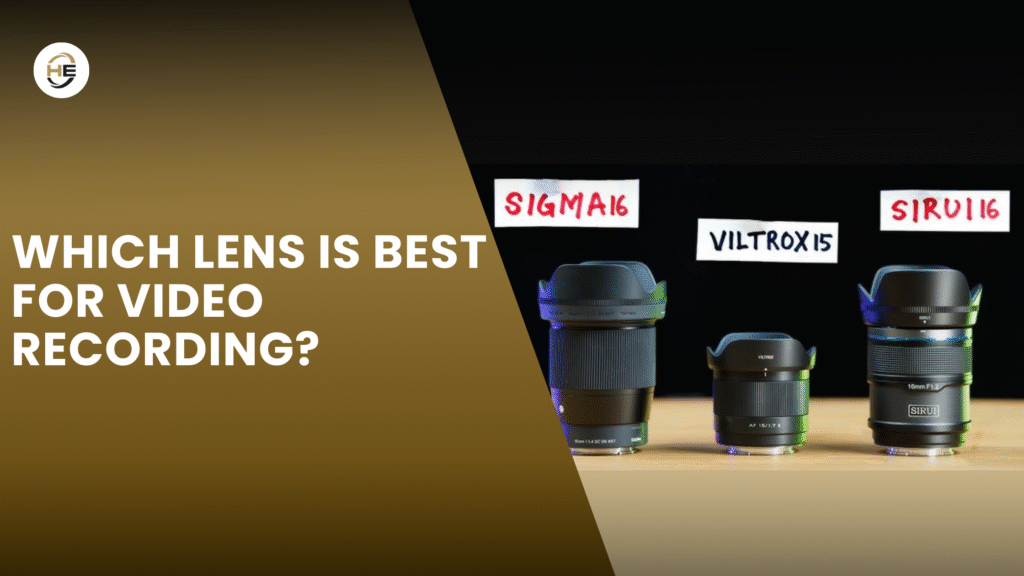
- Sigma 16mm f/1.4 DC DN Contemporary: Great for wide vlogs, talking-heads at arm’s length, and low‑light indoor shoots on Sony E, Canon EF‑M, and similar APS‑C mounts.
- Sigma 30mm f/1.4 DC DN Contemporary: A natural perspective prime for interviews and product shots with strong background blur, very popular with Canon M50 / Sony APS‑C users in Pakistan.
Mid-Range Professional Video Lenses
Mid-range lenses are ideal for serious content creators. They provide better optics, wider apertures, and smoother focus performance. These lenses work well for YouTube productions, weddings, or run-and-gun documentary shooting. Stabilization and accurate autofocus make shooting faster and more efficient.
Sigma offers several lenses suited for professional video:
- Sigma 24–70mm f/2.8 DG DN ll Art: Versatile standard zoom for events, podcasts, and corporate work, giving wide to short‑tele coverage with a constant bright aperture.
- Sigma 28–45mm f/1.8 DG DN Art: Designed for video on Sony E and similar systems, offering extremely bright constant aperture and sharpness for studio, podcast, and indoor content.
High-End Lenses for Commercial Video Production
High-end lenses are designed for commercial projects where image quality cannot be compromised. They deliver superior sharpness, minimal focus breathing, and excellent color consistency. These lenses are perfect for music videos, short films, or corporate productions. Professional setups often pair them with gimbals or cinema cameras for maximum effect.
Sigma offers both photography and cinema-grade options for high-end production:
- Sigma FF High Speed Prime (e.g., 35mm T1.5 FF Cine)
- Full‑frame cine prime with T1.5 aperture, geared rings, and standardized color across the set, ideal for narrative and high‑end ad work.
- Sigma FF High Speed Prime (e.g., 50mm T1.5 FF Cine)
- Classic cinematic focal length with extremely high resolution for 4K/8K, robust cine housing, and smooth focus for controlled, cinematic shots.
Tip: For your workflow in Pakistan (studio, YouTube, podcasts, client shoots), a particularly strong single pick to build around would be the
Sigma 24–70mm f/2.8 DG DN ll Art as your main mid‑range workhorse, then add primes according to your mount and style.
Final Verdict – Which Lens Is Best for Video Recording?
The choice of the correct lens to use in recording video is more of a matter of style, camera and the story one wants to narrate. You want the flexibility, a 24-70mm f/2.8 zoom lens is a reliable all-rounder as it allows you to swing easily between wide, standard, and medium-range telephoto lenses.
To achieve that film appearance, prime lenses of 35mm or 50mm provide you with crystal focus and the look of a hazy background. Beginners can start with cheaper alternatives, but professionals tend to use Sigma cinematography lenses with ease, to focus and have low breathing rates.
For creators in Pakistan, Hope Enterprises, the official Sigma reseller, provides genuine lenses, warranties, and expert advice, making sure you get authentic, high-quality gear. With the right lens in hand, your footage will be sharp, vibrant, and perfectly suited to your creative vision.
Frequently Asked Questions
The best lens for video recording depends on how you shoot and what you film. A 24–70mm f/2.8 zoom lens works as a strong all-rounder. It suits YouTube content, events, and documentaries. For cinematic results, 35mm or 50mm prime lenses perform better. They handle low light well and create pleasing background separation.
Image stabilization is very important for video recording. It becomes essential when shooting handheld. Stabilization reduces shakes and small jitters. This results in smoother, cleaner footage. It is especially useful for vlogging, travel videos, and event coverage. It also helps maintain stability in low light without always using a gimbal.