
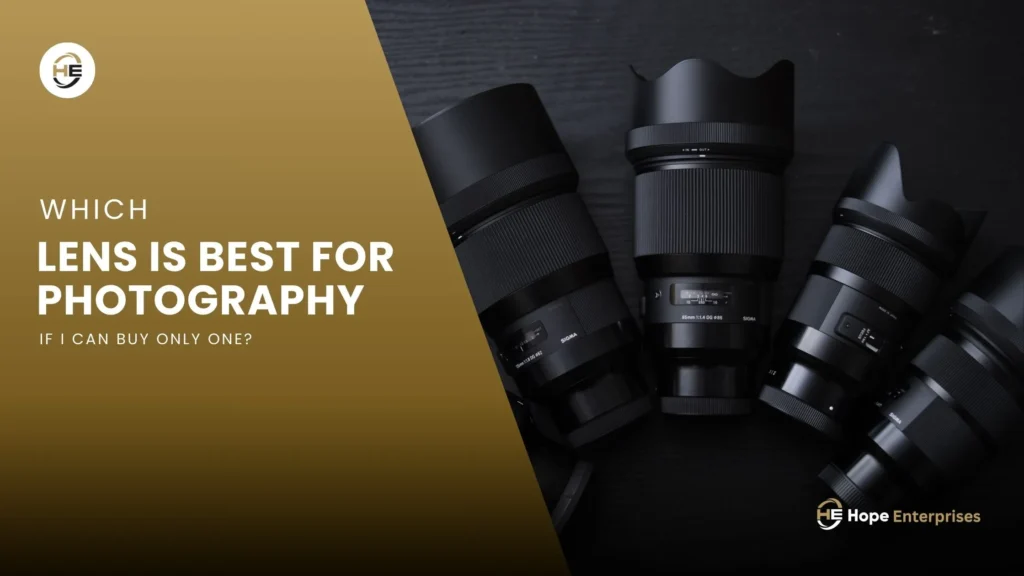
Picking out your first “real” lens can feel like a huge deal. You’re ready to take those pro-level shots, but maybe your budget or even just the space in your bag says you’ve got to stick to just one for now. Trust us, every photographer has been there. Since your lens is what actually lets the light in, finding the best camera lens is going to define your style for a long time.
But here’s the good news: you don’t need a mountain of gear to create something amazing. In fact, some of the most famous photos ever taken came from people who stuck to just one reliable lens. Whether you’re into sharp studio portraits or cool product shots, it’s all about finding that perfect balance of quality and “do-it-all” flexibility. At Hope Enterprises, we’re all about getting great gear into your hands. We’ve put this guide together to help you find the best camera lens that’ll stay in your kit as you get even better.
Why Choosing the Right First Lens Matters
Starting your photography journey with the right gear is about more than just spending money; it’s about setting yourself up for success. While your camera body handles the tech, your lens is what really creates the soul of the photo. Because of this, picking the best camera lens early on saves you a ton of frustration later.
The impact of a single lens on image quality is something you just can’t ignore. While a basic kit lens is fine for practice, investing in the best camera lens for your specific needs gives you much better clarity, richer colors, and that beautiful background blur everyone loves. Since this is your only tool for now, you want something that makes every single shot look professional.
In addition, it’s pretty incredible how one versatile lens can handle most studio needs. Whether you’re shooting a close-up headshot or a wider product setup, a flexible lens keeps the work flowing. You won’t have to stop and swap gear constantly. Consequently, you can focus more on the person in front of the camera and less on your equipment.
Finally, you might wonder why this decision is important for beginner and pro photographers alike. For a beginner, it builds up your confidence by getting rid of technical hurdles. For a pro, having the best camera lens in their bag is just a smart, simple way to work. Therefore, making a good choice now means your gear will stay useful for years to come.
What Makes a Lens “Best” When You Can Only Buy One
When you are restricted to a single lens, you cannot afford to have any weak links in your setup. The best camera lens isn’t just the most expensive one; it is the one that offers the most value across every shoot you attend. You need a piece of glass that feels like a Swiss Army knife—reliable, high-performing, and ready for anything.
To find this, you have to look past the marketing fluff and focus on three main pillars: how sharp the images are, how many different subjects it can capture, and how it performs when the lighting isn’t perfect. By prioritizing these factors, you ensure that your investment pays off every time you click the shutter. It is truly about finding the best camera lens where technical excellence meets everyday usability, giving you the confidence to shoot any project that comes your way.
Sharpness and Optical Quality
High-end lenses use specialized glass elements to minimize distortion and ensure that your subject looks tack-sharp from corner to corner. When you only have one lens, you need it to resolve fine details—like the texture of a fabric or the sparkle in a model’s eye with total precision.
It’s vital to understand how lens optics affect image clarity. Cheap optics can make your photos look “muddy” or soft, which is almost impossible to fix later in editing. Therefore, investing in the best camera lens with superior optical quality ensures that your raw files look professional the moment they hit your computer, saving you hours of post-processing work.
Versatility Across Different Shoots
If you are a studio photographer, you might switch from a tight beauty shot to a full-body fashion look in the same afternoon. A lens that is too “niche” will leave you feeling trapped and unable to capture the variety your clients expect. You need a focal length that feels natural for portraits but is wide enough to capture a larger scene.
This is exactly why one lens must handle many situations. This flexibility allows you to say “yes” to more projects without worrying about whether your gear can keep up. Consequently, the best camera lens becomes a partner in your creative growth rather than a limitation, giving you the freedom to experiment with different angles and compositions.
Low-Light Performance and Fast Aperture
Even though you likely have controlled lighting, having a lens with a “fast” aperture (like f/1.8 or f/2.8) gives you way more creative control over your images. It allows you to create a shallow depth of field, which helps your subject pop against the background with a soft, creamy blur.
We can’t forget the importance of wide aperture in studios. This light-gathering power means you don’t have to rely on high ISO settings that can add unwanted grain to your shots. Furthermore, if you ever take your camera out of the studio for lifestyle shoots, the best camera lens with a wide aperture is a lifesaver in dim environments.
Prime Lens vs Zoom Lens – Which Should You Choose?
Deciding between a prime and a zoom is the ultimate debate for any photographer starting their collection. Primes offer amazing quality at a fixed view, while zooms let you change your frame in a heartbeat. Both have unique strengths that can completely change how you approach your photography.
| Feature | Prime Lens | Zoom Lens |
| Best For | Sharpness & Low Light | Variety & Fast Action |
| Aperture | Usually f/1.4 – f/1.8 | Usually f/2.8 – f/4.0 |
| Weight | Lightweight & Compact | Heavier & Larger |
| Price | Affordable Quality | Higher for Pro-level |
Choosing the right style depends entirely on your personal workflow and the type of projects you plan to take on. If you enjoy moving around to find the best angle, a prime might be the best camera lens for your eye. However, if you find yourself in fast-paced environments, a zoom becomes an essential tool. Ultimately, the best camera lens is the one that feels more comfortable in your hands.
Benefits of Prime Lenses
Prime lenses are celebrated for their simplicity and incredible performance. Because they do not require complex moving parts to zoom in and out, manufacturers can focus purely on light transmission and image perfection. This results in a lens that is often lighter, smaller, and significantly more affordable than a high-end zoom lens of the same quality.
One of the biggest draws is the superior sharpness and wide aperture that primes provide. These lenses allow you to shoot in very dark environments while maintaining a crisp subject. Furthermore, the wide aperture creates a beautiful, blurry background that makes your subject stand out in a way that cheaper lenses simply cannot replicate. For many, a prime is the best camera lens for achieving that professional look.
Benefits of Zoom Lenses
Zoom lenses are the kings of convenience, offering multiple focal lengths packed into a single barrel. They are perfect for photographers who need to switch from a wide-angle group shot to a tight individual portrait without ever stopping to change equipment. This speed is a massive advantage in professional settings where time is literally money.
The primary advantage is the flexibility and variable focal lengths at your fingertips. You can experiment with different compositions instantly, which is helpful when space is tight or your subject is moving. Consequently, a single zoom lens can replace three or four separate primes in your bag. This makes it a contender for the best camera lens for event photographers who want to travel light.
Which Works Better in Studio Photography?
In a Studio Photography, the choice often comes down to the size of your space and the pace of your shoot. Many studio pros lean toward primes because they can control the distance between themselves and the model, allowing them to prioritize maximum sharpness. However, if you are shooting products of various sizes, a zoom might be the best camera lens for saving you from constantly moving your tripod.
Best Single Lens Options for Studio Photography
Identifying the right lens for your studio is a game-changer for your workflow. Since you are working in a controlled environment, you have the luxury of picking a lens that truly excels in specific areas like sharpness or depth of field. The goal is to find the best camera lens that doesn’t just “do the job,” but actually enhances the quality of your lighting and set design.
Versatile Prime Lenses
Prime lenses have a cult following in the studio world for a very good reason. They are often smaller and more light-sensitive than their zoom counterparts, which makes them a joy to use during long shooting days. Because they are optimized for a single focal length, the image quality is usually breathtakingly crisp.
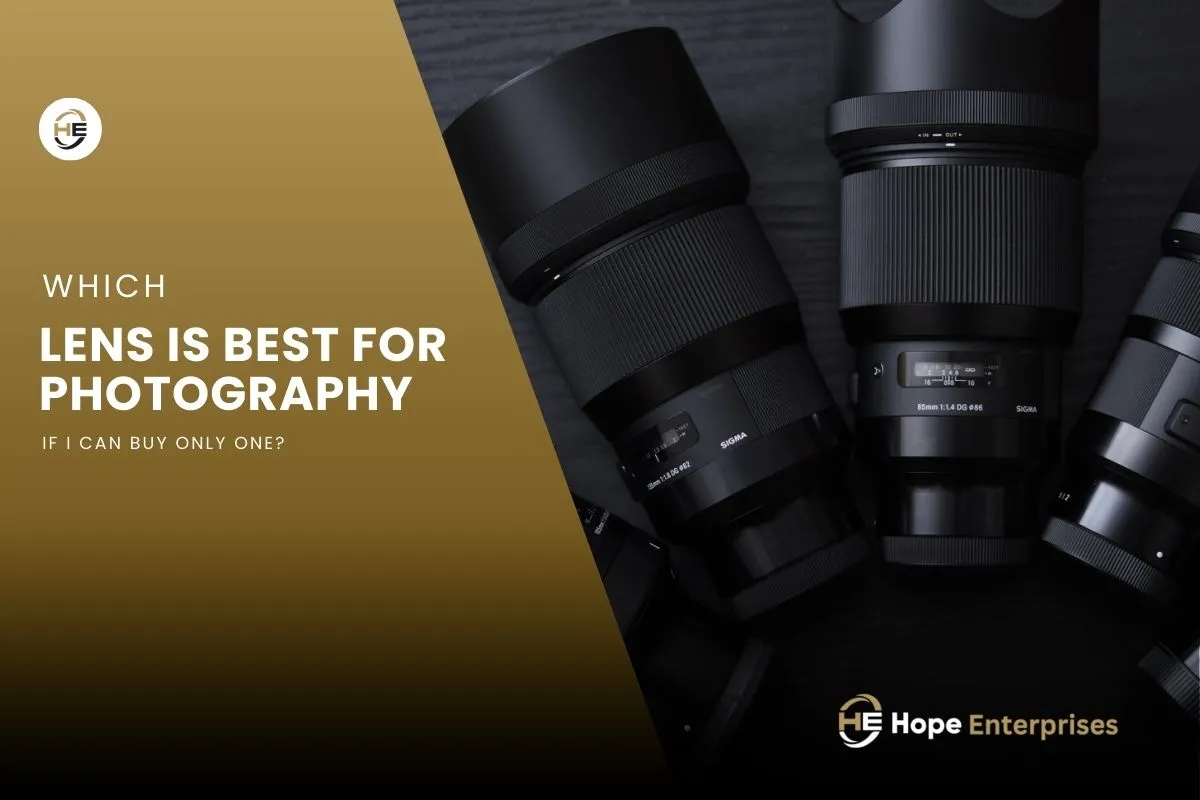
It is easy to see why they are often the top choice for creators. Without the complex glass needed for zooming, these lenses deliver unmatched clarity and a wider aperture, which is perfect for isolating your subject. Common examples include the 35mm for wide scenes, the classic 50mm for a natural look, or the 85mm for stunning portraits.
All-in-One Zoom Lenses
If you want the maximum amount of utility without ever taking the lens off your camera, an all-in-one zoom is your best friend. These lenses are designed to cover the most common focal lengths used in professional work, allowing you to go from a wide-angle room shot to a tight headshot in seconds. They are essentially a bag full of lenses in a single package.
When using a zoom like the popular 24-70mm f/2.8 DG DN II Art, there are specific trade-offs to keep in mind regarding Pros and cons for studio use:
- Pro: Incredible speed when switching between different types of shots.
- Pro: Perfect for tight studio spaces where you can’t always move your feet.
- Con: Generally heavier and bulkier than prime lenses.
- Con: Can be significantly more expensive to get a zoom that matches the sharpness of a basic prime.
Recommended Focal Lengths for a Single Lens Setup
Choosing a specific focal length is one of the most personal decisions a photographer can make. When you are restricted to just one lens, that choice determines your “signature” look and how you interact with your subjects. In a studio, this choice is even more critical because the physical space often dictates what you can actually capture.
35mm – Wide and Flexible
The 35mm lens is a favorite for those who want to tell a story that includes the environment. It offers a slightly wider field of view than what the human eye sees, making it feel cinematic and open. It is perfect for photographers who work in smaller studios or those who want to capture the “vibe” of a location along with their subject.
This focal length is Good for environmental portraits and full setups where you need to show the background. Because it is wider, it allows you to stay relatively close to your subject while still fitting their entire body into the frame. This makes it an excellent choice for fashion photography or lifestyle brand shoots.
50mm – Classic Everyday Lens
Known as the “Nifty Fifty,” this lens is perhaps the most versatile piece of glass ever made. It mimics the magnification of the human eye, which means your photos will look very natural and undistorted. If you aren’t sure where to start, a 50mm f/1.4 DG DN Art is almost always a safe and highly professional bet for any genre.
The beauty of this lens is its Great balance of natural perspective and sharpness across the entire frame. It is tight enough for a beautiful headshot but wide enough for a half-body portrait. Consequently, it has become the standard “workhorse” for millions of photographers around the world.
85mm – Best for Portraiture
If your main goal is to capture stunning, professional-grade portraits, the 85mm is the king of the studio. This lens is known for “telephoto compression,” which subtly flattens features in a way that is incredibly flattering to the human face. It is the gold standard for high-end headshots and beauty photography.
The primary reason to choose an 85mm f/1.4 DG DN Art is the Soft background blur and flattering portraits it produces so effortlessly. By separating the subject from the background with a shallow depth of field, you create a sense of luxury and focus. While you do need a bit more physical space, the resulting images have a “wow factor” that is hard to match.
What Professional Photographers Choose as Their Only Lens
Ever wonder what the pros keep on their cameras when they want to keep things simple? While it’s tempting to want every gadget in the store, most experts actually swear by a very minimal setup. They know that mastering one great lens is better than struggling with five mediocre ones. Pros usually pick their “one and only” based on the specific type of work that pays their bills.
Studio Portraits and Headshots
In the world of professional portraiture, consistency is the name of the game. Clients expect to look like the best version of themselves, and the right lens makes that happen. Pros in this field need a lens that handles skin tones beautifully while providing enough distance to keep the model comfortable.
There’s a reason why 50mm or 85mm often wins here for most portrait experts. The 50mm feels natural and works in smaller home studios, while the 85mm provides that elite, compressed look found in high-fashion magazines. Both lenses allow the photographer to blur out the background completely, making the subject the undisputed star of the show.
Product Photography
When you’re shooting items for a catalog or a website, every tiny detail counts. You need to show off textures, labels, and colors with perfect accuracy. For this kind of work, a “soft” lens just won’t cut it—you need something that can handle close-up details without any weird distortion.
This is exactly why a sharp mid‑range lens matters for commercial success. A lens in the 35mm to 50mm range allows you to get close enough to see the fine print on a product while keeping the lines straight and realistic. Therefore, pros often choose a high-quality prime to ensure that the products look sharp and premium.
Editorial and Fashion Shoots
Fashion photography is all about movement, energy, and variety. One minute you might be shooting a close-up of a designer accessory, and the next you’re capturing a model jumping in front of a giant backdrop. Because things move so fast, your gear has to be ready for any creative pivot.
In these fast-paced settings, When versatility is key, many pros reach for a high-end zoom like a 24-70mm lens. It lets them change the “vibe” of the shot instantly without stopping the music or breaking the model’s flow.
Pro Tips for Practical Use:
- Use the wider end (24-35mm) for edgy, full-body shots that show off the whole outfit.
- Zoom in to 70mm for tight beauty shots or to highlight specific fabric textures.
- Always check your corners for light stands if you’re shooting wide in a small studio.
Why SIGMA Lenses Are Great as Your First
If you’re looking for a lens that combines professional quality with a price tag that doesn’t hurt, SIGMA is a name you’ll hear a lot. They’ve become a favorite for photographers who want that “Art” series look without the massive markup. Whether you’re just starting or you’re a pro looking for a new workhorse, their glass delivers exactly what you need.
Outstanding Optical Performance
SIGMA has spent years perfecting their lens designs to compete with the biggest names in the industry. Their lenses are known for being incredibly crisp, even when you’re shooting with the aperture wide open. This means you don’t have to worry about soft edges or weird color fringing ruining your best shots.
The main draw here is the Sharpness and detail you can rely on during every single session. When your clients see the final photos, they’ll notice the professional touch that only high-quality glass can provide. Therefore, investing in their lineup ensures that your portfolio always looks its absolute best.
Wide Aperture for Studio Control
Having a “fast” lens is like having a superpower in the studio. Most of SIGMA’s top lenses feature wide apertures like f/1.4, which lets in a massive amount of light. This gives you way more freedom to play with your lighting setups and creative styles without hitting the limits of your gear.
You’ll love the strong background separation that these lenses offer. It allows you to create that dreamy, professional look where your subject pops right off the screen. Furthermore, it gives you the flexibility to shoot in lower light if you ever decide to step away from your studio strobes and try out some moody, natural light shots.
Durable Build for Everyday Use
Let’s be honest: gear gets bumped, bruised, and used heavily when it’s your only lens. That is why the rugged design of a SIGMA lens is such a huge benefit. They use high-quality materials that feel solid in your hand and can handle the daily grind of a busy studio. Plus, many of their newer models are weather-sealed, so you don’t have to panic if you take your “only” lens out on a rainy lifestyle shoot.
How to Choose the Right Lens Based on Your Camera
Before you fall in love with a specific lens, you need to make sure it actually talks to your camera. Not all gear is built to play nice together, and choosing the wrong version can lead to a lot of headaches. It is all about understanding the “handshake” between your lens and your camera body.
Mount Compatibility and Sensor Size
Every camera brand has its own specific “mount,” which is the physical connection point where the lens attaches. Even within the same brand, there can be different types of mounts for mirrorless cameras versus older DSLRs. You also have to consider the size of the sensor inside your camera.
It is absolutely vital to make sure the lens matches your camera system before you hit that buy button. If the mount isn’t a perfect fit, the lens won’t lock into place, and the electronic pins won’t be able to communicate for things like autofocus. Consequently, taking a few minutes to verify your camera model’s mount type saves you from the frustration of a return.
Full-Frame vs APS-C Considerations
If you’re using a camera with a smaller “crop” sensor (APS-C), your lens is going to behave differently than it would on a full-frame body. Basically, a smaller sensor only sees the middle part of the image, which makes your lens feel “zoomed in.” This can actually be a benefit or a challenge depending on what you’re trying to photograph.
You need to understand how focal lengths differ on different sensors to get the look you want. For example, a 50mm lens on an APS-C camera actually looks more like a 75mm lens. Therefore, if you want a true “standard” view on a crop sensor, you might actually need a 35mm f/1.4 DG DN Art lens instead.
Final Thoughts – Pick the Lens That Covers Most Needs First
Finding the best camera lens for your style is all about knowing what you want to create. It doesn’t have to be complicated—just focus on the kind of shots you take most often and choose the tool that makes those images truly shine. When you’re starting out, keeping things simple is actually your biggest advantage.
Don’t forget the recap of why one lens can be enough to build a stunning, pro-level portfolio. Sticking to one piece of glass helps you master your craft and keeps your workflow super clean. You’ll be surprised at how much you can do when you really know your gear inside and out.
As you shop, always prioritize sharpness, versatility, and aperture to get the most bang for your buck. These three features are the “secret sauce” for professional results. If the best camera lens for you is sharp, flexible, and lets in plenty of light, you’re already halfway to a masterpiece.
Finally, we always encourage photographers to grow their kit over time as they discover their own unique style. You don’t need every gadget on day one. Start with the best camera lens from Hope Enterprises, a trusted camera shop in Pakistan, build your skills with confidence, and only add more gear when you truly feel limited. Happy shooting.
Frequently Asked Questions
Can one lens handle portraits and products?
Yes, a versatile lens like a 50mm can easily handle both. It provides the sharpness needed for detailed product shots and the natural perspective required for flattering portraits. By adjusting your distance and aperture, you can capture professional results for diverse clients using just one high-quality piece of glass.
What focal length should my first lens be?
A 50mm lens is usually the best starting point for most photographers. It offers a field of view similar to the human eye, making it incredibly intuitive to use. This focal length works perfectly for portraits, products, and lifestyle shots, providing a great balance of versatility and professional image quality.
Is a prime lens better than a zoom if I can buy only one?
A prime lens is often better for a single-lens setup because it offers superior sharpness and a wider aperture. While zooms provide convenience, a prime forces you to master composition and lighting. This results in higher-quality images and a faster learning curve for beginners who want a professional look.