
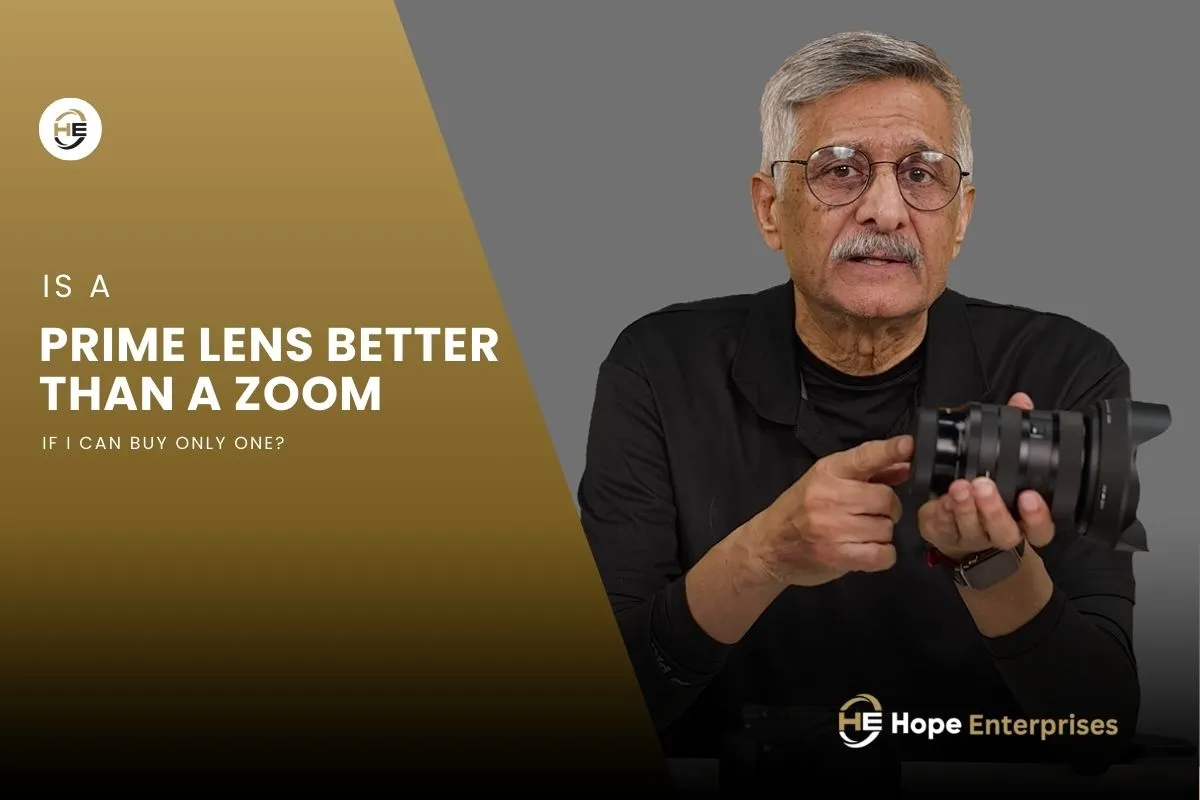
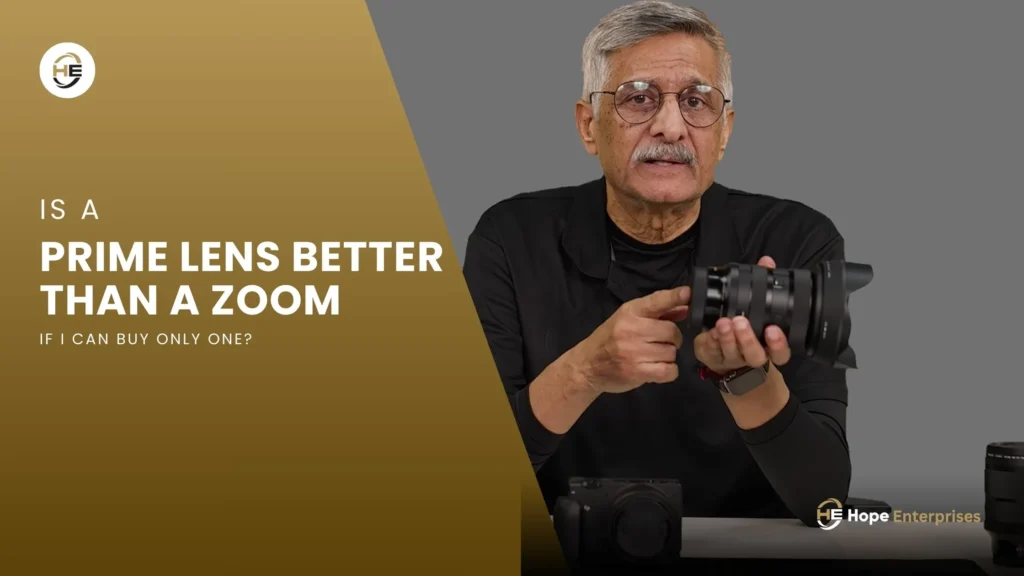
Buying your first serious camera lens can feel confusing, especially when your budget allows only one option. Many photographers in Pakistan face the same question early on: should they choose a prime lens or a zoom lens? Both options promise strong results, yet they serve different shooting styles and learning paths.
This decision matters because the best camera lens is not always the most expensive one. Instead, it is the lens that fits your real work, space, and subjects. A studio photographer needs something very different from someone shooting events or mixed content.
At Hope Enterprises, we regularly guide photographers through this exact dilemma. As a trusted distributor of imaging equipment, we see how the right lens choice improves both confidence and results. In this guide, we break down primes and zooms clearly, compare them honestly, and help you decide which single lens makes the most sense for your needs today.
Introduction – The One-Lens Dilemma for Photographers
Choosing only one lens forces photographers to think carefully about how they shoot. Unlike large kits, a single-lens setup must handle most situations without compromise. This is why the prime-versus-zoom debate exists.
A prime lens offers simplicity, sharpness, and creative depth. A zoom lens offers flexibility and speed. However, neither is universally better. The best camera lens depends on whether you value creative control or practical coverage.
Beginners often lean toward zoom lenses for versatility. Meanwhile, studio photographers often prefer primes for consistency. Budget, shooting environment, and subject matter all play major roles in this decision.
At Hope Enterprises, we encourage photographers to focus on real use cases instead of trends. When you understand how each lens type behaves, choosing the best camera lens becomes much easier and far more practical.
Understanding Prime Lenses
Fixed focal length lenses are often recommended for photographers who want strong image quality and creative control. They use a fixed focal length, which means no zooming in or out. While that may sound limiting, it often leads to better technique and stronger visual results.
Because of their optical simplicity, single-focal lenses are known for sharpness and wide apertures. This makes them popular in studio work, portraits, and low-light photography. For many professionals, a prime lens becomes the foundation of their kit.
What Is a Prime Lens?
A single focal length camera lens is a lens with a single, fixed focal length, such as 35mm, 50mm, or 85mm. You cannot zoom in or out. Instead, you move physically to frame your subject.
This design allows manufacturers to optimize image quality more precisely. As a result, fast aperture lenses are often sharper and brighter than zoom lenses. Many photographers consider a fixed lens option the best camera lens for learning composition and lighting control.
Advantages of Prime Lenses
Fixed focal lenses offer clear benefits for photographers who value image quality and creative depth.
- Wider apertures allow stronger background blur and better low-light performance.
- Fewer glass elements usually result in sharper images and higher contrast.
- Lightweight designs make them comfortable for long studio sessions.
- Fixed focal length encourages thoughtful framing and stronger composition skills.
Limitations of Prime Lenses
Despite their strengths, single-focal optics lenses are not perfect for every situation. The fixed focal length can feel restrictive, especially when shooting multiple subjects or tight spaces. You may need to move frequently, which is not always practical.
In fast-paced environments, changing position instead of zooming can slow you down. This is why some photographers hesitate to rely on a prime as their only option. While a prime can be the best camera lens for controlled setups, it may struggle in unpredictable shooting conditions.
Understanding Zoom Lenses
Zoom lenses are designed for flexibility. They cover a range of focal lengths in one lens, allowing photographers to adjust framing quickly without changing position. This makes them popular for events, travel, and multi-purpose work.
Modern multi-purpose zoom glass has improved greatly in optical quality. Many now offer professional-level sharpness while maintaining convenience. For photographers who need speed and adaptability, a zoom lens often feels like the safest single-lens choice.
What Is a Zoom Lens?
A variable focal range lens allows you to change focal length within a defined range, such as 24–70mm or 70–200mm. This means one lens can replace several primes.
Because of this versatility, many beginners see a zoom as the best camera lens for general use. It allows experimentation with different perspectives without carrying extra gear.
Advantages of Zoom Lenses
Adjustable focal lenses are valued for practical reasons, especially when photographers must react quickly.
- Multiple focal lengths reduce the need to swap lenses frequently.
- Faster framing helps during events or changing studio setups.
- One lens can handle wide, medium, and tight compositions.
- Ideal for photographers working with limited time or space.
Limitations of Zoom Lenses
Variable range optics are often heavier and more complex than prime lenses. They usually have smaller maximum apertures, which limits background blur and low-light performance.
Because of the added glass elements, sharpness may be slightly lower compared to primes. While modern zooms are excellent, they may not always deliver the same optical purity. For photographers focused on fine detail, a zoom may not always feel like the best camera lens choice.
Prime vs Zoom – Which Should You Buy If You Can Only Have One?
If you can buy only one lens, the decision comes down to how and where you shoot most often. The best camera lens is the one that supports your daily workflow without frustration.
| Feature | Prime Lens | Zoom Lens |
| Focal Length | Fixed | Variable |
| Aperture | Wider | Usually narrower |
| Flexibility | Limited | High |
| Image Quality | Very high | High |
A fixed focal lens suits controlled environments and creative work. A multi-range zoom lens suits varied subjects and fast sessions. If your work demands consistency and style, choose prime. If it demands speed and range, choose zoom.
Recommended First Lenses for Studio Photography
Studio photography rewards consistency, sharpness, and lighting control. When choosing your first lens, think about space size and subject type. The best camera lens for a studio is one that delivers repeatable results without complexity.
Best Prime Options
Portrait-focused prime optics are popular in studios for portraits and products. Options like Sigma 50mm F1.4 DG DN Art or Sigma 85mm F1.4 DG DN Art offer excellent sharpness and beautiful background separation.
These lenses perform well under artificial lighting and allow precise control over depth of field. For photographers focused on quality, these primes often feel like the best camera lens investment.
Best Zoom Options
Professional zoom optics work well in studios that handle varied subjects. A Sigma 24–70mm F2.8 DG DN II Art is a strong example. It covers wide and portrait ranges while maintaining professional image quality.
This type of lens suits photographers who shoot people, products, and branding content in the same space.
When a Prime Lens Makes More Sense
A fixed aperture lens shines when your shooting conditions are predictable. If you work in a fixed space and value image quality, a prime often becomes the best camera lens for long-term use.
Small Studio, Controlled Lighting
In small studios, photographers usually stand at consistent distances. A single focal lens fits this environment perfectly. You can fine-tune lighting and framing without needing zoom flexibility.
This setup allows maximum sharpness and creative background control, making primes very efficient.
Portrait and Product Photography
Portraits and products benefit from shallow depth of field and optical clarity. Fast prime lenses deliver clean separation and accurate details.
For photographers specializing in these areas, a prime lens often proves to be the best camera lens choice.
When a Zoom Lens Is Better
Flexible zoom systems lenses are ideal when shooting conditions change often. If you need adaptability, a zoom can easily become the best camera lens for your workflow.
Multi-Purpose Shoots or Variable Subjects
When subjects move or change quickly, adjustable zoom lenses save time. You can reframe instantly without interrupting the session.
This is especially useful for commercial and mixed-content shoots.
Travel or On-Location Studio Work
On-location work limits movement. A travel friendly zoom lens helps cover multiple compositions from one position.
For photographers who work outside traditional studios, a zoom is often the best camera lens solution.
Why SIGMA Lenses Are a Reliable Choice
Sigma lenses are known for balancing performance, durability, and value, which makes them a trusted option for photographers at every level. When you are investing in one lens, reliability becomes just as important as image quality. Sigma has built its reputation by delivering consistent results across different camera systems and shooting styles.
Their lenses are designed to perform well in real working conditions, not just test charts. For photographers who want dependable gear without paying premium-brand prices, Sigma offers long-term confidence and strong value through authorized distributor Hope Enterprises.
High-Quality Optics and Sharpness
Sigma lenses use advanced optical designs to deliver consistent sharpness across the frame. Their primes and zooms are engineered with high-grade glass elements that control distortion, flare, and color fringing. This results in clean details, accurate colors, and strong contrast, even when shooting wide open.
Whether you are capturing portraits, products, or studio work, Sigma lenses maintain clarity from center to edge. This optical reliability makes them suitable for professional workflows where image quality must stay consistent across multiple shoots and demanding client expectations.
Wide Apertures for Studio Control
Many Sigma lenses offer wide apertures that support creative lighting control in studio environments. A wide aperture allows photographers to manage depth of field more precisely, isolate subjects, and soften backgrounds without relying heavily on complex lighting setups.
This flexibility is especially useful in portrait and product photography, where mood and subject separation matter. Wide apertures also improve low-light performance, helping maintain lower ISO levels for cleaner images. With Sigma lenses, photographers gain more creative control while keeping their setups efficient and predictable.
Durable Build for Long-Term Use
Sigma lenses are built for daily professional use, not occasional shooting. Their solid construction includes reinforced barrels, high-quality mounts, and reliable internal mechanisms that hold up under frequent lens changes and long sessions.
This durability is especially important for photographers working in studios, on-location, or during extended shoots. A well-built lens reduces the risk of performance issues over time. When purchased through Hope Enterprises, Sigma lenses become a smart long-term investment that delivers both physical reliability and consistent optical performance.
Final Thoughts – Choose Based on Your Needs
There is no single answer that fits every photographer. The best camera lens is the one that matches your space, subjects, and shooting habits. Fixed focal lenses reward control and creativity. Variable focal zoom lenses reward flexibility and speed. When buying only one lens, focus on what you shoot most often.
At Hope Enterprises, we help photographers choose equipment that supports growth, not confusion. With the right guidance and reliable brands like Sigma, you can invest confidently and build a kit that truly works for you.
Frequently Asked Questions
Is a prime lens always better than a zoom?
A prime lens is not always better than a zoom lens. Prime lenses offer wider apertures, strong sharpness, and simple handling. However, zoom lenses provide flexibility and convenience in many situations. The better choice depends on your shooting style, space, and whether you value creative control or versatility more in daily use.
Can I use a zoom lens for studio portraits?
Yes, a zoom lens works very well for studio portraits. It allows you to change framing quickly without moving lights or the subject. Modern zoom lenses deliver excellent sharpness and consistent results. In controlled studio lighting, a quality zoom lens can produce professional portraits with ease and reliability.
Which is better for beginners starting a studio?
For beginners starting a studio, a zoom lens is often the better choice. It offers flexibility, covers multiple focal lengths, and reduces the need to buy extra lenses. This helps new photographers learn composition and framing while keeping costs controlled and workflows simple.